Short answer: Safe industrial gas use depends on proper storage, clear labeling, correct equipment, leak prevention, ventilation, and employee training.
Industrial gases are essential in manufacturing, food processing, laboratories, healthcare, and maintenance operations, but they also introduce serious hazards if handled improperly. OSHA notes that compressed gases can create risks related to high pressure, oxygen displacement, fire, explosion, and toxic exposure, which is why special precautions are required in the workplace.
1. Store Cylinders Upright and Secure Them
Gas cylinders should be kept upright and secured so they cannot tip, fall, or be struck. OSHA and CGA both emphasize upright storage and stable restraint as basic safety requirements. Cylinders should also be kept away from heat sources, flames, and areas where they could become damaged.
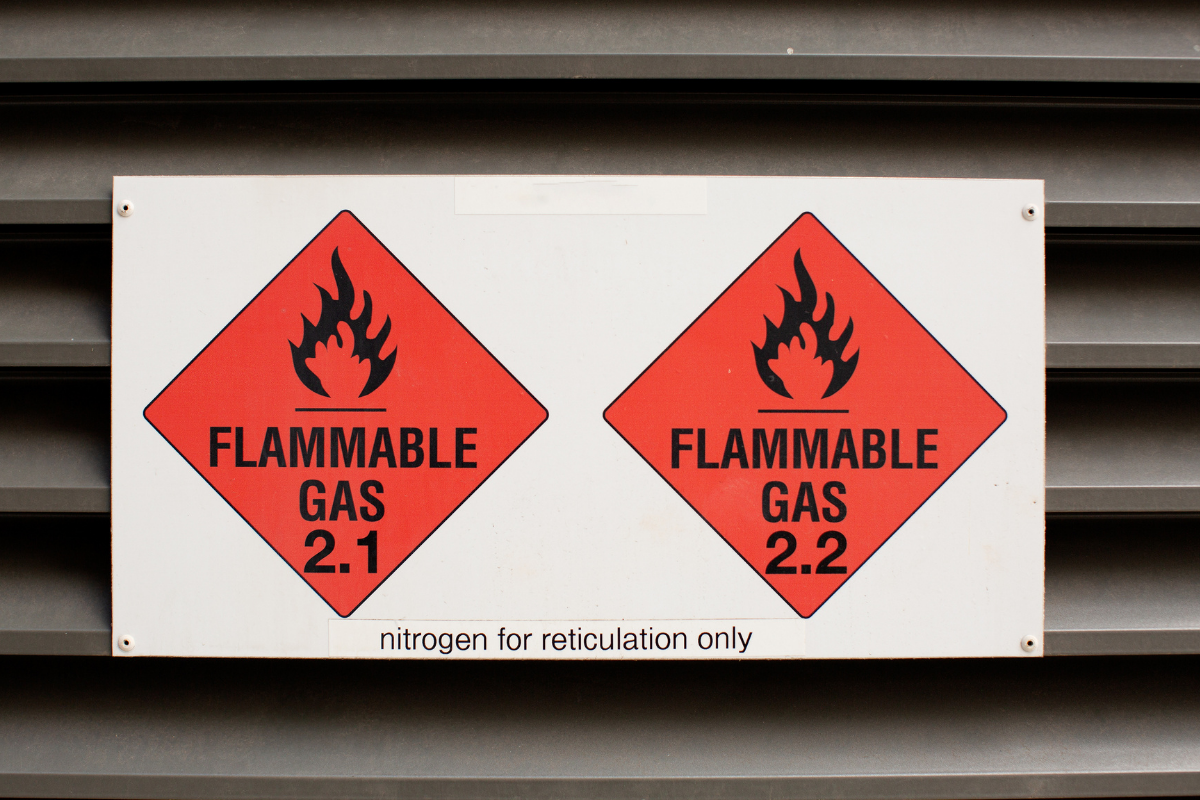
2. Use Clear Labels and the Correct Equipment
Cylinders must be clearly marked so workers can identify the gas inside, and the correct regulator and outlet connections must always be used. Never modify fittings, valves, or cylinders to make equipment “fit.” Using the wrong regulator or tampering with connections increases the risk of leaks, equipment failure, and unsafe operation.
3. Inspect for Damage and Check for Leaks
Before use, employees should visually inspect cylinders, valves, hoses, and regulators for signs of wear, corrosion, or damage. OSHA requires employers to determine that cylinders are in safe condition through visual inspection, and CGA recommends regular leak checks using approved methods.
4. Move Cylinders Safely
Cylinders should be transported with appropriate carts or carriers — not rolled, dropped, or lifted by the valve cap. When moved by powered vehicles, they should be secured in a vertical position. Unless they are firmly secured on a carrier intended for that purpose, regulators should be removed and valve protection caps installed before movement.
5. Prioritize Ventilation and Training
Some gases, including carbon dioxide, can displace oxygen in enclosed spaces, so good ventilation and hazard awareness are essential. Workers should be trained to read labels and safety data sheets before use and to follow site-specific emergency procedures if a leak occurs.
The Bottom Line
Industrial gas safety is not just about compliance — it is about protecting people, equipment, and operations. A workplace built around proper storage, handling, inspection, and training is far better positioned to prevent incidents before they start. Partnering with an experienced supplier like Irish Industrial Gases helps reinforce those standards with the right products, systems, and guidance.