Industrial gases play a vital role across manufacturing, food processing, healthcare, and research — but not all gases are stored or delivered the same way. One of the most common questions customers ask is: What’s the difference between compressed and liquefied gases?
Compressed gases are stored in cylinders at high pressure and remain in a gaseous state. Common examples include carbon dioxide, oxygen, nitrogen, argon, and hydrogen. These gases are ideal for applications requiring smaller volumes, intermittent use, or portability. Because compressed gases are delivered as-needed, they offer flexibility and are well suited for labs, welding operations, and maintenance work.
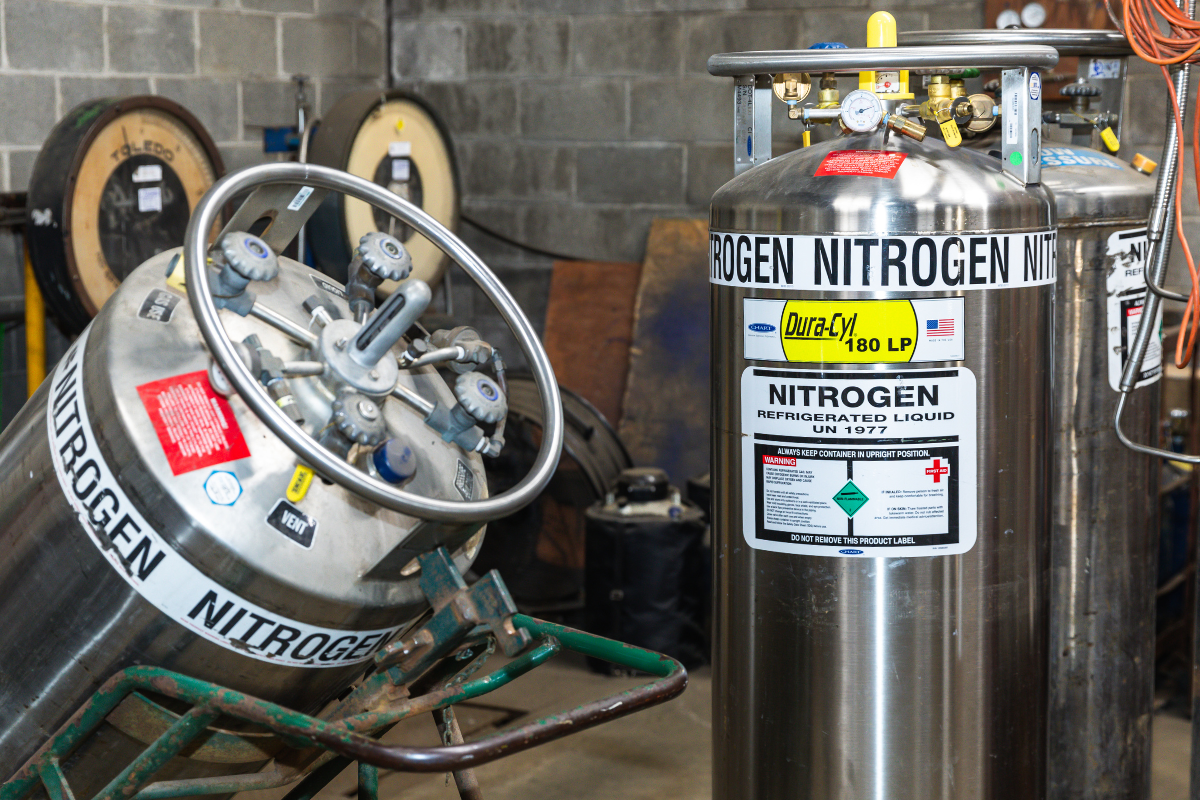
Liquefied gases, on the other hand, are gases that have been cooled to extremely low temperatures until they condense into a liquid. Examples include liquid nitrogen, liquid oxygen, and liquid carbon dioxide. Liquefied gases are stored in insulated cryogenic vessels and expand back into gas when warmed. This form allows significantly larger quantities of gas to be stored in a smaller footprint, making it ideal for high-volume or continuous-use operations.
So how do you choose the right option? The decision depends on several factors, including gas consumption rate, available space, safety considerations, and cost efficiency. Operations with steady, high demand often benefit from liquefied gas systems, while smaller or variable applications may be better served by compressed cylinders.
Understanding the difference ensures you’re not overpaying, under-supplying, or compromising safety. A knowledgeable gas supplier can help assess your operation and recommend the most efficient, reliable solution for your needs.