Industrial Gases in Manufacturing: Improving Efficiency and Quality

In modern manufacturing, precision and consistency are non-negotiable. Whether producing metal components, food products, electronics, or specialty materials, even minor inefficiencies can impact quality and profitability. Industrial gases play a vital, though often unseen, role in improving both operational efficiency and product integrity.

Gases such as nitrogen, oxygen, argon, carbon dioxide, and hydrogen are used across a wide range of manufacturing processes. In metal fabrication, for example, nitrogen and argon serve as shielding gases during welding and laser cutting. By protecting molten metal from exposure to oxygen, they help prevent defects, improve weld strength, and reduce rework.

In food and beverage production, nitrogen and carbon dioxide are used for chilling, freezing, and modified atmosphere packaging (MAP). These applications extend shelf life, maintain freshness, and reduce spoilage — directly improving yield and reducing waste.

Industrial gases also enhance efficiency through process control. In semiconductor fabrication, coating applications, and chemical production, carefully controlled gas environments ensure consistency at the microscopic level. Stable, high-purity gas supply helps manufacturers maintain tight tolerances and reduce variability between production runs.

Another major benefit is automation and scalability. Modern on-site or bulk gas systems provide steady, uninterrupted supply, reducing downtime caused by cylinder changeouts or inconsistent pressure. Automated monitoring systems allow facilities to plan deliveries proactively, minimizing disruption and labor demands.

Beyond productivity, industrial gases contribute to workplace safety and environmental goals. Cleaner combustion processes, reduced chemical use, and efficient temperature control help manufacturers operate responsibly while meeting regulatory standards.

Partnering with a knowledgeable supplier like Irish Industrial Gases ensures the right gas type, purity level, and delivery system are matched to each facility’s specific needs.

In manufacturing, excellence is built on precision. Industrial gases quietly support that precision — improving efficiency, strengthening quality control, and helping operations perform at their highest level.

How On-Site Gas Systems Improve Productivity

For many industrial and manufacturing operations, gas supply is not just a utility — it’s a critical production input. When gas flow is inconsistent or cylinder changeouts interrupt workflow, productivity suffers. That’s why many facilities are turning to on-site gas systems to improve efficiency, reliability, and overall performance.

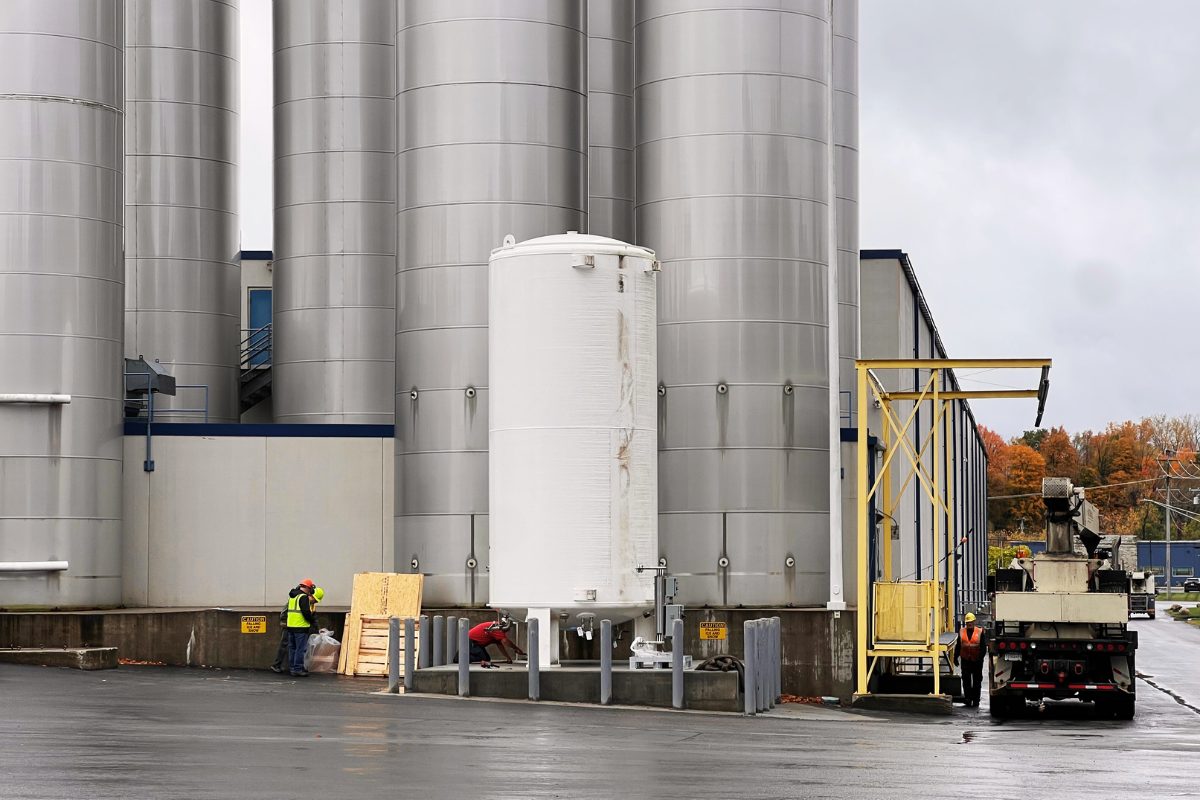
An on-site gas system stores and distributes gas, often in bulk form, directly at the facility. Instead of relying solely on individual cylinders that require manual replacement, centralized systems provide a steady, continuous supply of gases such as nitrogen, oxygen, argon, or carbon dioxide.

One of the most immediate productivity gains comes from reduced downtime. With automated monitoring and scheduled refills, on-site systems minimize unexpected shortages. Employees no longer need to pause operations to swap cylinders, transport tanks, or troubleshoot pressure inconsistencies. In high-volume manufacturing environments, even small interruptions can compound into significant production delays.

On-site systems also improve process consistency. Stable pressure and controlled distribution ensure that applications like welding, laser cutting, food processing, and coating operations perform uniformly. Consistency reduces defects, improves product quality, and lowers material waste.

From a labor perspective, centralized gas systems enhance workplace efficiency and safety. Fewer cylinder changeouts mean less manual handling, fewer connection points, and reduced risk of leaks or improper installation. Streamlined storage areas also free up valuable floor space for production activities.

Scalability is another advantage. As operations grow, on-site systems can often be expanded to meet increased demand without completely overhauling infrastructure. This flexibility supports long-term planning and operational resilience.

Partnering with an experienced supplier like Irish Industrial Gases ensures system design aligns with your facility’s specific usage patterns and growth goals.

In fast-paced industries, productivity depends on eliminating friction wherever possible. On-site gas systems remove one of the most common bottlenecks — keeping operations moving smoothly, safely, and efficiently.

Bulk vs. Cylinder Gas Supply: Which Is Right for You?

Choosing the right gas supply method is a critical operational decision. Whether you rely on oxygen, nitrogen, argon, carbon dioxide, or specialty gases, the way those gases are delivered can affect cost, efficiency, safety, and reliability. The two most common options are cylinder gas supply and bulk gas supply — and each has its place.

Cylinder gas supply involves individual high-pressure cylinders delivered and exchanged as needed. This option is often ideal for operations with lower or intermittent gas usage, limited space, or a need for portability. Laboratories, small fabrication shops, and maintenance teams frequently rely on cylinders because they offer flexibility and minimal upfront infrastructure. Cylinders also allow businesses to scale usage up or down easily without major system changes.

However, as usage increases, cylinder management can become labor-intensive. Frequent changeouts, storage requirements, and inconsistent supply levels may lead to downtime or inefficiencies.

That’s where bulk gas supply comes in. Bulk systems store large quantities of gas — often in liquid form — on-site in dedicated tanks. These systems are designed for high-volume or continuous-use operations, such as manufacturing facilities, food processors, or large welding operations. Bulk supply reduces the need for constant cylinder handling, improves consistency, and often lowers the cost per unit of gas.

Bulk systems also enhance operational reliability. With automated monitoring and scheduled deliveries, businesses are less likely to experience unexpected shortages. In addition, centralized systems improve safety by reducing manual handling and minimizing the number of connection points.

So which is right for you? The answer depends on several factors:

  • Volume and consistency of gas usage
  • Available space and infrastructure
  • Safety and labor considerations
  • Long-term cost efficiency

Many businesses start with cylinders and transition to bulk as their operations grow. Working with an experienced provider like Irish Industrial Gases ensures your gas supply is matched to your actual needs.

The right solution isn’t about size — it’s about fit.

How Industrial Gases Support Precision Optics & Advanced Manufacturing

Precision optics and advanced manufacturing demand an extraordinary level of control. Whether producing lenses, coatings, semiconductors, or highly engineered components, even microscopic inconsistencies can impact performance. Industrial gases play a critical, though an often invisible, role in achieving the accuracy and repeatability these industries require.

One of the most important functions of industrial gases is environmental control. In cleanrooms and controlled manufacturing spaces, gases such as nitrogen are used to displace oxygen and moisture. This helps prevent oxidation, contamination, and particulate interference during sensitive processes like lens polishing, coating deposition, and semiconductor fabrication. Maintaining a stable, inert atmosphere protects both materials and finished products.

Industrial gases are also essential in coating and surface treatment processes. Optical coatings — used to enhance reflectivity, transmission, or durability — often rely on vacuum deposition techniques such as sputtering or chemical vapor deposition (CVD). Gases like argon, oxygen, and nitrogen are precisely introduced to control film thickness, adhesion, and optical properties. Consistency at this stage is vital, as even slight variations can affect clarity or performance.

In advanced manufacturing, gases support laser cutting, welding, and additive manufacturing. Nitrogen and argon are commonly used as shielding gases, protecting molten material from reacting with air. This results in cleaner cuts, stronger welds, and improved structural integrity — especially important for components used in aerospace, defense, medical devices, and optical systems.

Beyond production, industrial gases support quality control and testing. Helium, for example, is widely used for leak detection due to its small atomic size and stability. Detecting leaks at the microscopic level ensures reliability in sealed optical systems and high-performance assemblies.

Reliable gas supply and system design are just as important as the gases themselves. Working with an experienced local provider like Irish Industrial Gases ensures consistent purity, dependable delivery, and systems tailored to complex manufacturing environments.

In precision optics and advanced manufacturing, success depends on controlling the unseen. Industrial gases make that control possible — quietly enabling accuracy, innovation, and excellence.

Extra Small
Small
Medium
Large
Extra Large
Double XL